You moved from the mainland, hired a pool service, and now you’re watching them dump chlorine into your pool every week. More chlorine than you ever used back home. Is this normal, or are you getting oversold?
The short answer: it’s probably normal. Puerto Rico’s UV index runs 10-12 year-round—classified as “extreme” on the EPA scale—and that changes everything about pool chemistry. Pools here consume chlorine at rates that surprise most mainland owners, often 2-3 times what they’re used to. But what actually matters is understanding why this happens and whether your service is handling it correctly.
Three factors drive the difference: UV intensity, water temperature, and rainfall patterns. Once you understand the science, the maintenance requirements make sense.
UV Intensity: Your Chlorine’s Worst Enemy
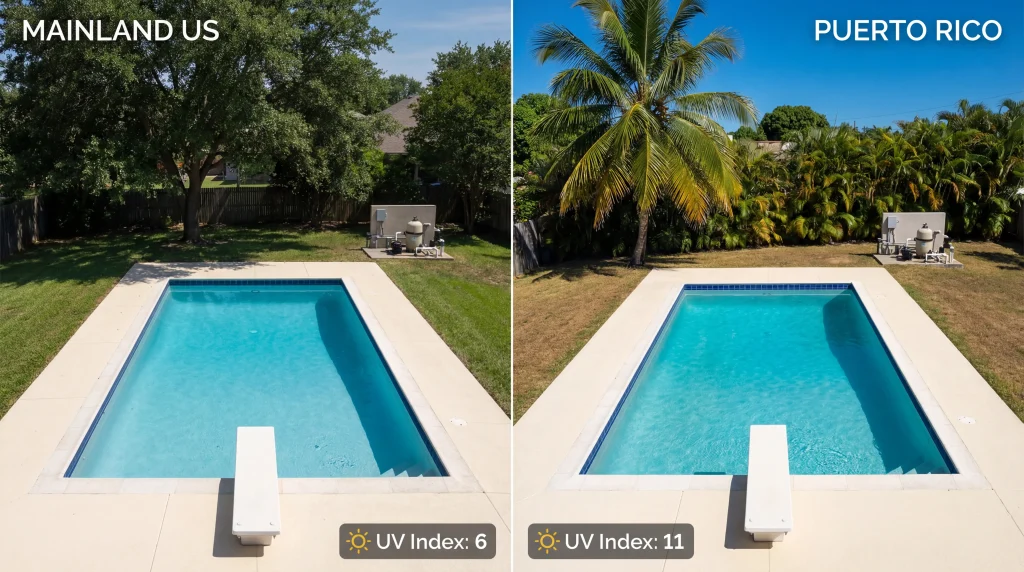
Puerto Rico sits at 18°N latitude, which means intense solar radiation year-round. Most mainland locations see UV index values of 6-8 during summer months and much lower during winter. Here, we rarely drop below 7 even in January.
Here’s why this matters for your pool: UV radiation destroys chlorine through a process called photolytic decomposition. Without protection, chlorine in Puerto Rico conditions has a half-life of roughly 20-45 minutes. Within 2-3 hours of direct sunlight, unprotected chlorine loses 75-90% of its effectiveness. Not over days—hours.
That chlorine your service added this morning? By early afternoon, most of it may already be gone.
This is where cyanuric acid (CYA) becomes essential. CYA acts as sunscreen for your chlorine, binding to chlorine molecules and shielding them from UV degradation. Without adequate CYA, you’re essentially pouring chlorine into water that can’t hold it.
The catch is that mainland pool advice typically recommends CYA levels of 30-50 ppm. In Puerto Rico, you need higher—50-60 ppm for traditional chlorine pools, and 70-80 ppm for saltwater systems. This isn’t excessive; it’s what the conditions require. And CYA itself degrades faster here, losing an estimated 5-10 ppm per month from UV breakdown, oxidation, and rainfall dilution. Testing every two weeks is appropriate rather than the monthly schedule that works on the mainland.
Water Temperature: Year-Round Algae Pressure
Mainland pools get a break during winter. Water temperatures drop, algae goes dormant, chemical consumption decreases, and many pools close entirely for months.
Puerto Rico pools never get that break.
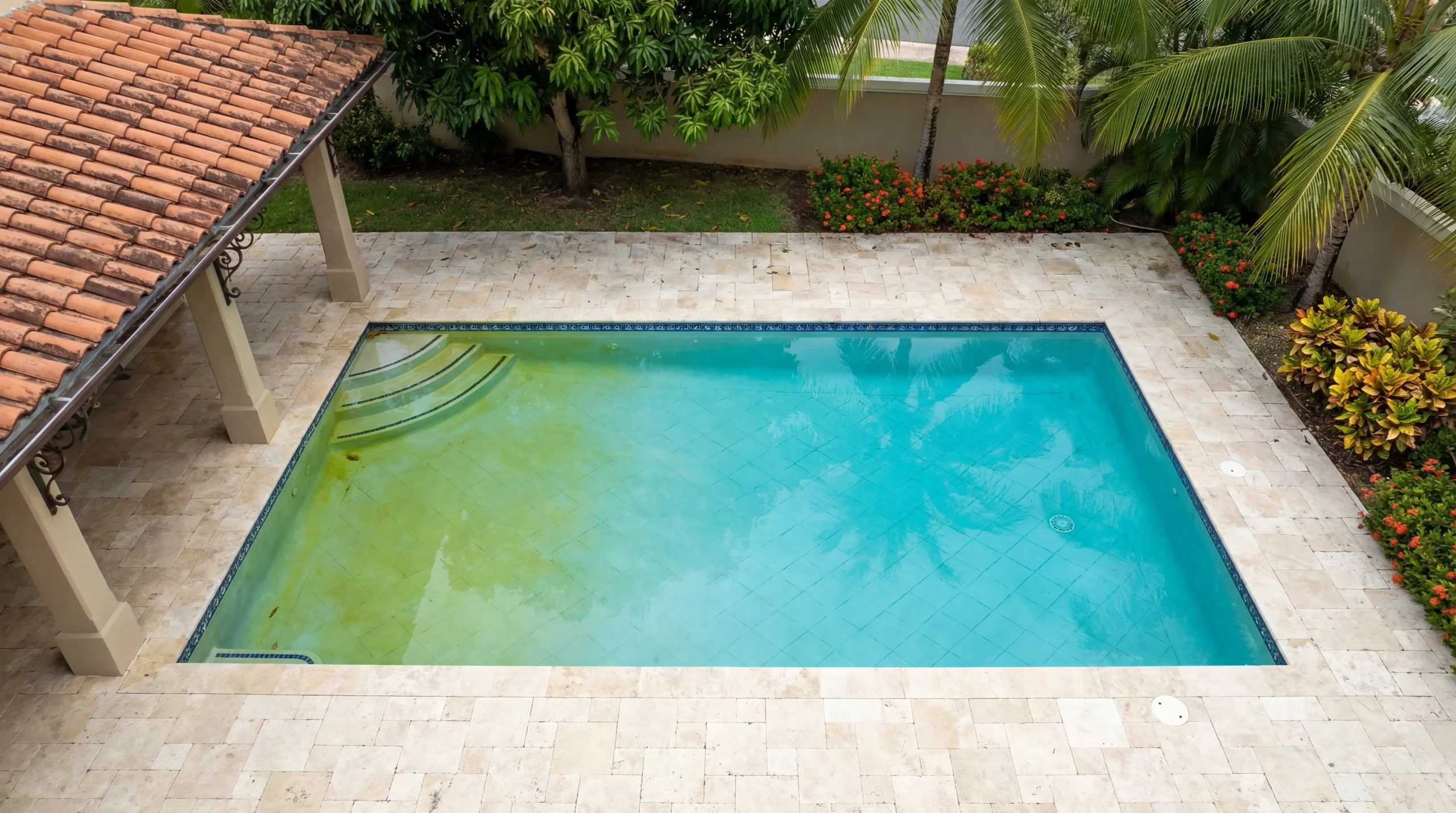
Your water temperature stays between 82-88°F year-round. That’s comfortable for swimming—and ideal for algae. Most algae species thrive at 77-88°F, which means your pool operates in the optimal growth zone 365 days a year. There’s no winter dormancy, no seasonal slowdown, just constant biological pressure.
Warm water also accelerates chemical reactions. Chlorine demand roughly doubles for every 10°F increase above 80°F. A pool here at 85°F naturally consumes chlorine faster than the same pool would at 72°F in New Jersey during September.
This has practical implications. While mainland pools might tolerate bi-weekly service during cooler months, Puerto Rico pools need consistent weekly attention regardless of season. Skip a week, and you’re not just behind—you may be dealing with an algae bloom that takes days to resolve.
Rainfall: Dilution and Contamination
According to climate data for Puerto Rico, the island receives 60+ inches of rainfall annually, with the wet season (May through November) bringing frequent afternoon storms. Every significant rainfall event affects your pool chemistry in multiple ways.
First, rainwater dilutes your pool. Chlorine levels can drop 30-50% after a major storm. pH typically decreases because rainwater runs around pH 5.0—significantly more acidic than your target of 7.4-7.6.
Second, rainfall introduces contaminants. Storm runoff carries phosphates and nitrates from landscaping—nutrients that algae use to grow. Organic debris increases dramatically. All of this raises chlorine demand exactly when chlorine levels have just been diluted.
Professional protocols in Puerto Rico include pre-storm super-chlorination when major weather is forecast and immediate post-storm testing within 24-48 hours. If your service isn’t checking chemistry after significant rainfall, they’re leaving your pool vulnerable during its highest-risk window.
What This Means for Maintenance
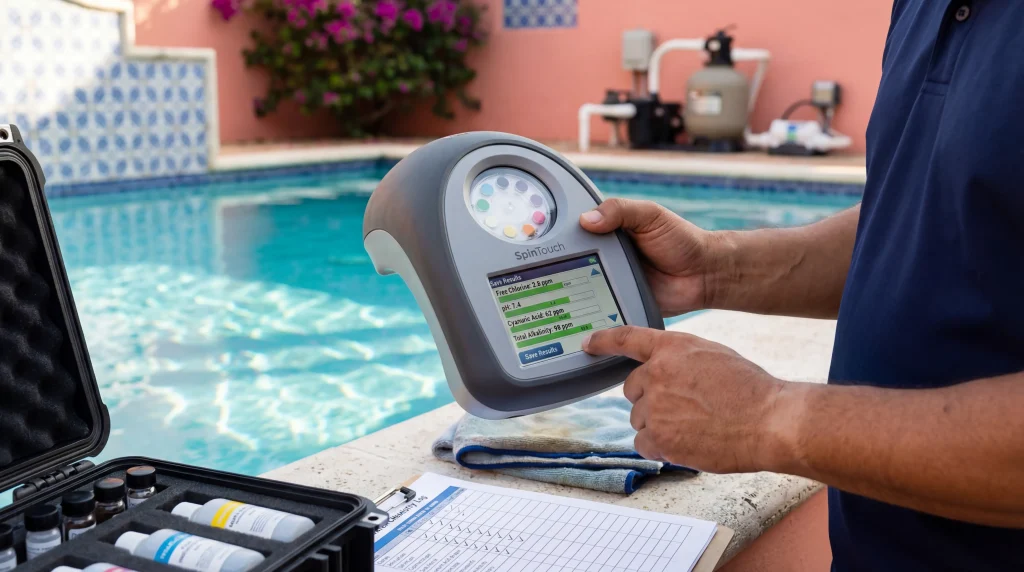
Understanding these factors explains why Puerto Rico pool maintenance looks different from what you might expect.
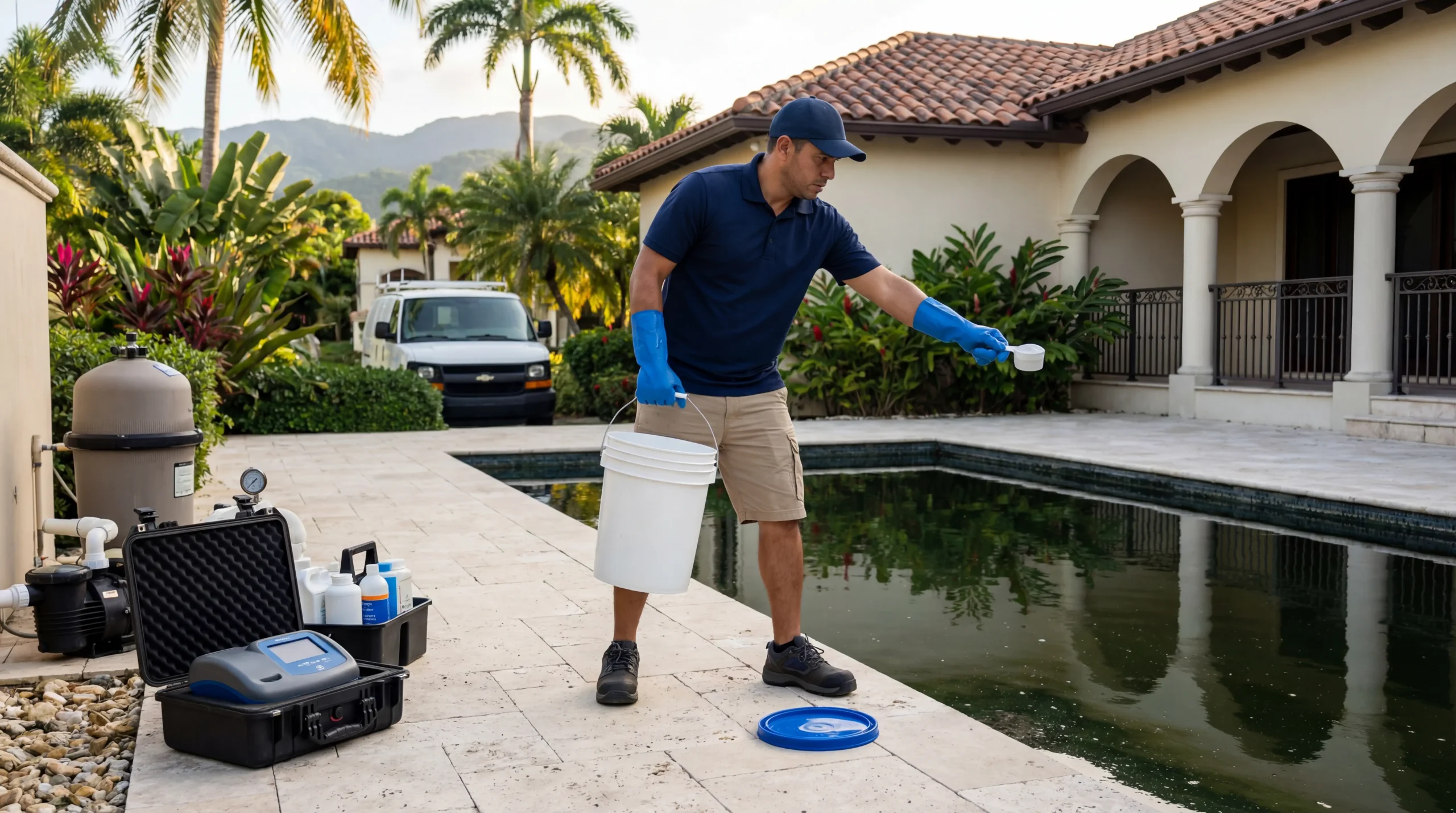
Testing frequency matters more. Mainland pools might get by with weekly testing. Puerto Rico pools need chemistry checks 2-3 times per week, especially during wet season. Conditions change faster here, and problems develop faster when they’re not caught.
Chemical parameters are different. Standard mainland recommendations don’t account for tropical conditions. Proper pool service in Puerto Rico should be working with adjusted targets:
| Parameter | Mainland Standard | Puerto Rico Target |
|---|---|---|
| CYA (chlorine pools) | 30-50 ppm | 50-60 ppm |
| CYA (saltwater pools) | 30-50 ppm | 70-80 ppm |
| Free Chlorine | 1-3 ppm | 3-5 ppm |
| Testing Frequency | Weekly | 2-3x per week |
| CYA Testing | Monthly | Every 2 weeks |
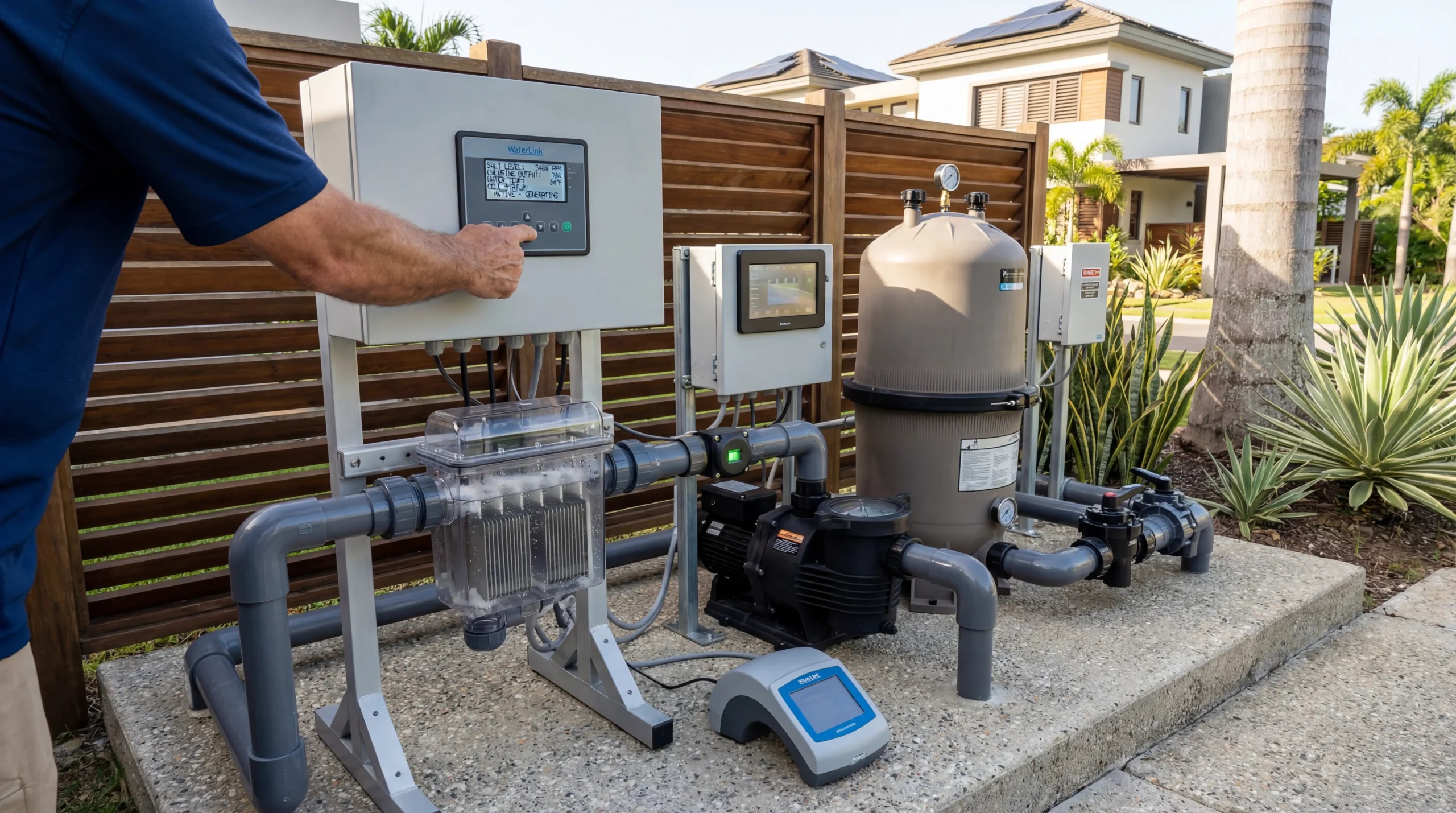
Trichlor tablets create problems. Those convenient chlorine tablets that work fine on the mainland become an issue in year-round pools. Each tablet adds CYA along with chlorine—roughly 6 ppm of CYA per 10 ppm of chlorine delivered. Without winter shutdown to partially drain and dilute the pool, CYA accumulates to problematic levels within months. Professional services here typically use liquid chlorine (sodium hypochlorite) or salt chlorine generators as primary sanitizers, adding CYA separately only when levels fall below target.
Evaluating Your Current Service
If you’re working with a pool service, here’s how to evaluate whether they understand tropical conditions:
Ask about CYA testing frequency. It should be at least monthly, ideally every two weeks during wet season. If they’re only checking CYA quarterly—or never—they’re applying mainland protocols.
Ask about their chlorine source. Trichlor-only approaches in year-round pools indicate they either don’t understand CYA accumulation or they’re prioritizing convenience over proper chemistry.
Ask about post-storm protocols. Do they check your pool after significant rainfall? Do they adjust service timing when storms are forecast?
Check whether they explain the “why.” A service that understands tropical pool chemistry can explain why they’re doing what they’re doing. If they can’t articulate why Puerto Rico pools need different care, they may be applying generic protocols that don’t fit local conditions.
What Proper Tropical Pool Care Looks Like
When pool maintenance is adapted for Puerto Rico conditions, you should see stable chlorine levels that don’t crash between service visits, clear water without recurring algae problems, CYA levels that stay in optimal range instead of climbing indefinitely, and chemistry that bounces back quickly after storms.
At Pristine Pools, we maintain pools throughout Palmas del Mar, Humacao, and Naguabo using protocols specifically designed for tropical conditions. Our weekly maintenance program includes the testing frequency, chemical management, and storm response that local conditions demand.
If your current service isn’t getting results despite regular visits, the issue may not be effort—it may be approach. Understanding why Puerto Rico pools are different is the first step toward actually solving the problem.
Frequently Asked Questions
Why does my pool need so much chlorine in Puerto Rico?
Puerto Rico’s UV index of 10-12 destroys unprotected chlorine within 2-3 hours through photolytic decomposition—the same process happens on the mainland but takes 4-6 hours due to lower UV intensity. Combined with year-round water temperatures of 82-88°F that accelerate chemical consumption and support constant algae growth, pools here consume chlorine 2-3 times faster than mainland pools. Proper CYA levels of 50-60 ppm help protect chlorine from UV degradation, reducing overall consumption while maintaining effective sanitization.
What CYA level should I maintain in Puerto Rico?
For traditional chlorine pools in Puerto Rico, target CYA levels of 50-60 ppm—higher than the mainland standard of 30-50 ppm. For saltwater pools, 70-80 ppm is appropriate because the salt chlorine generator produces chlorine continuously, and protecting that output from UV degradation is critical. CYA degrades faster in tropical conditions, losing approximately 5-10 ppm per month, so testing every two weeks ensures levels stay in the optimal range rather than drifting too low or accumulating too high.
Can I use trichlor tablets in a Puerto Rico pool?
Trichlor tablets work for adding chlorine but create long-term problems in year-round pools. Each tablet adds CYA along with chlorine, and without winter shutdowns to dilute the pool, CYA accumulates to problematic levels within months. High CYA reduces chlorine effectiveness, creating a cycle where you need more chlorine to achieve the same sanitization. Professional services typically use liquid chlorine or salt chlorine generators as primary sanitizers, adding CYA separately only when levels fall below target.
How often should pool chemistry be tested in tropical climates?
Puerto Rico pools should have chemistry tested 2-3 times per week, compared to weekly on the mainland. Conditions change faster here—UV depletes chlorine rapidly, afternoon storms dilute and contaminate water, and warm temperatures accelerate algae growth. More frequent testing catches problems before they escalate. CYA specifically should be tested every two weeks rather than the mainland monthly or quarterly schedule, since it degrades faster in tropical conditions.
Why does my pool turn green so quickly in Puerto Rico?
Year-round water temperatures of 82-88°F create ideal algae growth conditions 365 days a year—there’s no winter dormancy period like mainland pools experience. Algae species thrive at 77-88°F, and Puerto Rico pools operate in this optimal growth zone constantly. If chlorine drops below effective levels for even 24-48 hours, algae can bloom visibly. Combined with frequent rainfall introducing algae spores and nutrients, prevention through consistent chemistry is the only reliable strategy. Recovery from established algae takes days, while prevention requires only consistent maintenance.Share