You converted to saltwater expecting less hassle—and in some ways, you got it. No more hauling chlorine tablets, no more storage concerns, no more eye-burning chemical smell. The water feels softer, and when everything’s working properly, maintenance becomes almost invisible.
But here’s what the conversion sales pitch probably didn’t emphasize: salt chlorine generators require specialized knowledge that most traditional pool service providers simply don’t have. The technology is different. The chemistry behaves differently. And in Puerto Rico’s year-round tropical conditions, the maintenance demands are higher than what mainland guidelines suggest.
Salt cell lifespan typically ranges from 3-7 years with proper care. With improper maintenance? Cells can fail in under two years—sometimes within months. A replacement cell costs $400-900 depending on your system. That’s expensive insurance against ignorance.
How Saltwater Systems Actually Work
Understanding your system helps you evaluate whether your service provider actually knows what they’re doing.
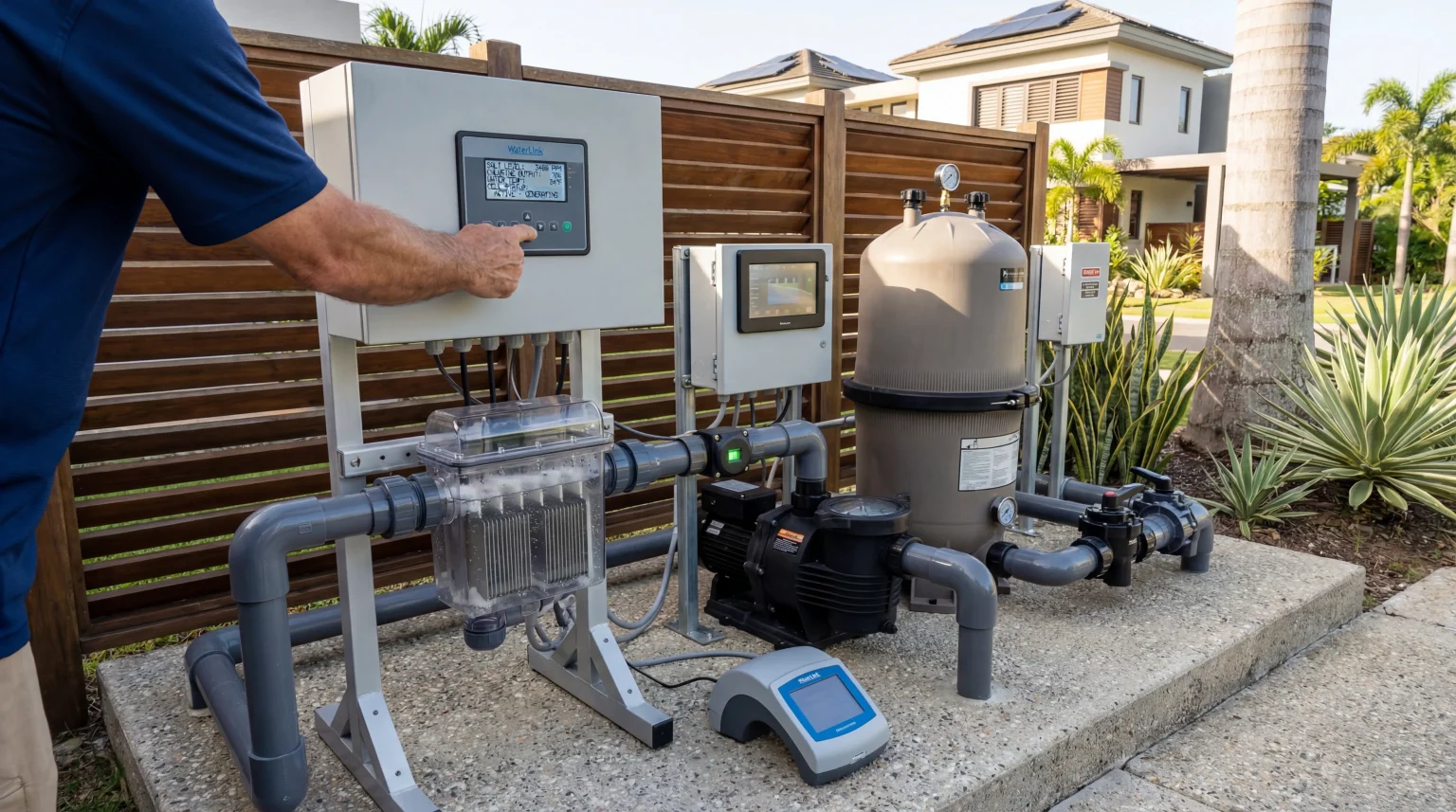
A salt chlorine generator uses electrolysis to convert dissolved salt into chlorine. Water flows through a cell containing titanium plates coated with precious metal oxides. When electrical current passes between these plates, salt (sodium chloride) breaks apart—the chlorine sanitizes your pool while the sodium recombines with water. The chlorine eventually reverts back to salt, creating a continuous cycle.
This is why you rarely need to add salt after the initial setup. Unlike chlorine, which gets consumed, salt stays in your water unless removed through splash-out, backwashing, rainfall dilution, or draining.
Salt Cell Maintenance: The Core Requirement
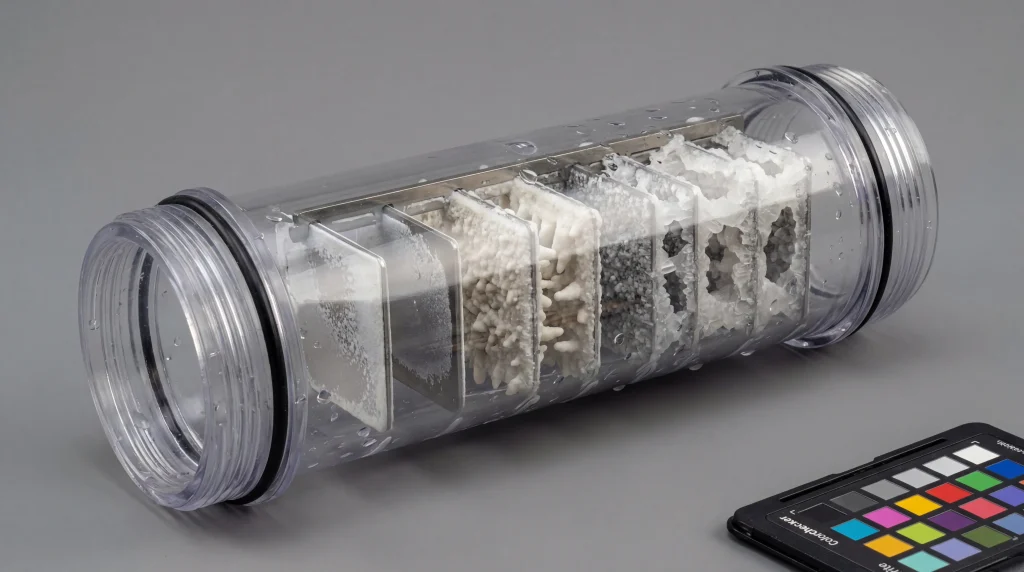
The salt cell is the heart of your system, and it’s also its consumable component. Those titanium plates slowly degrade with every hour of operation. Calcium scale accumulates on the surfaces. The coating wears thin. Eventually, the cell can no longer generate adequate chlorine, and it needs replacement.
Your job—or your service provider’s job—is to maximize the cell’s productive lifespan while ensuring consistent chlorine production.
Inspection frequency matters more than cleaning frequency. Most manufacturers recommend inspecting the cell every 2-3 months, or every 500 hours of operation. But inspection and cleaning are different things. You should inspect regularly; you should clean only when scale is actually present. Over-cleaning with acid wears down the protective coating and shortens cell life just as surely as never cleaning it.
Here’s what proper inspection looks like: remove the cell from the plumbing, rinse with a garden hose, and visually examine the plates. White, flaky buildup is calcium scale—the primary enemy of salt cell longevity. If scale is bridging between plates or coating surfaces heavily, cleaning is needed. If the plates are relatively clean, reinstall and check again in 2-3 months.
Cleaning protocol is specific and time-sensitive. When cleaning is necessary, the standard approach uses diluted muriatic acid—typically 1 part acid to 4-10 parts water, depending on manufacturer recommendations. The cell soaks until foaming stops, usually 5-10 minutes maximum. Longer exposure strips the protective coating. More frequent acid cleaning than necessary causes cumulative damage.
Self-cleaning cells reverse polarity to reduce scale accumulation, but “self-cleaning” is a marketing term that overpromises. These cells still require regular inspection and occasional manual cleaning. The polarity reversal helps—it doesn’t eliminate the problem.
Chemistry Adjustments for Saltwater Pools
Saltwater pools require the same chemistry parameters as traditional chlorine pools, with a few important differences in how those parameters behave.
pH tends to rise. The electrolysis process naturally increases pH, often requiring more frequent acid additions than traditional pools. If your service provider doesn’t understand this, they’ll chase pH problems without ever addressing the root pattern. A saltwater pool that consistently needs pH lowering isn’t broken—it’s behaving normally.
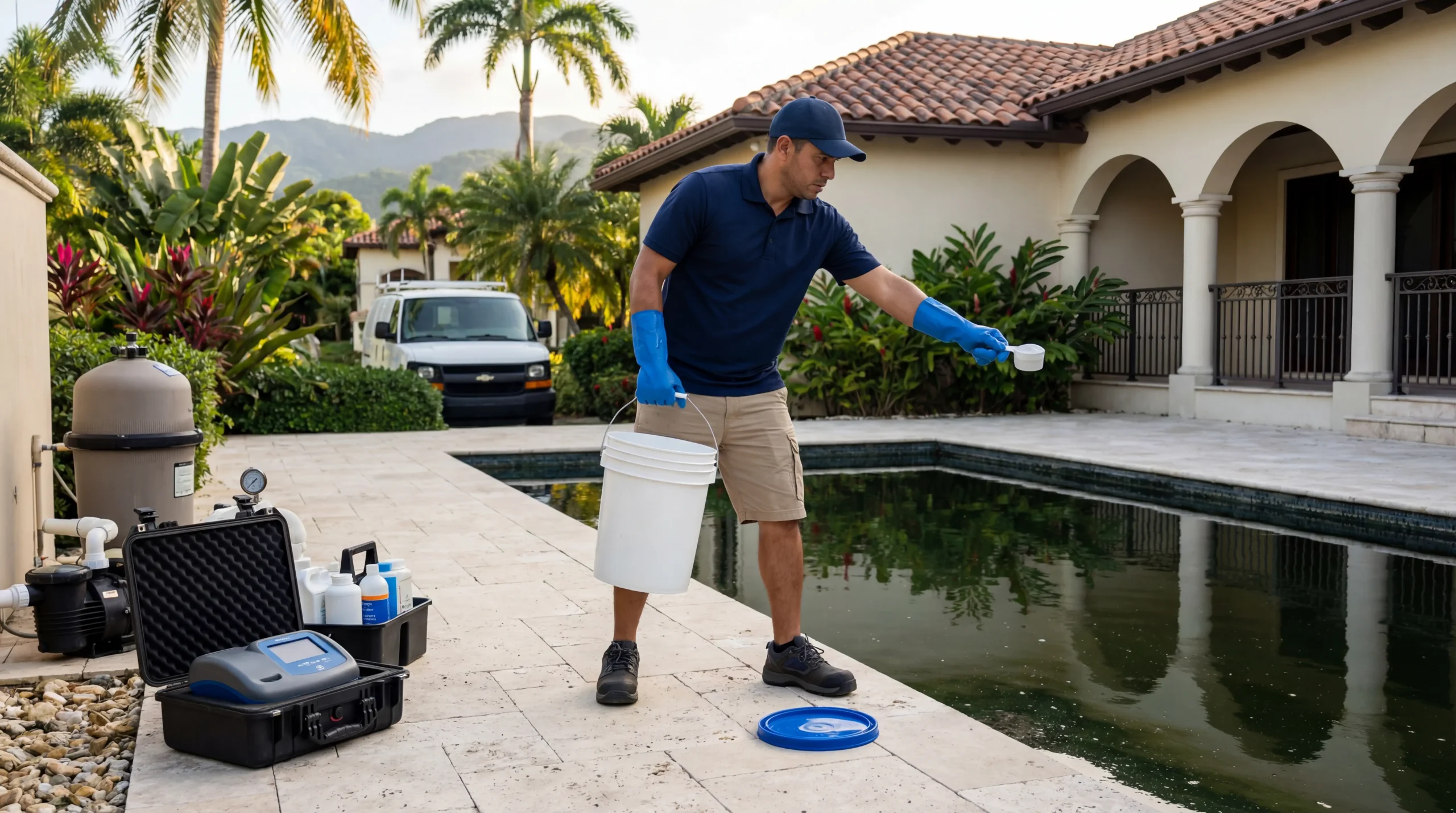
Salt levels need verification, not assumption. Target range is typically 2,700-3,400 ppm, with 3,200 ppm being ideal for most systems. The generator’s display shows a reading, but those readings can drift from actual levels. Manual testing with a quality salt test kit (the Taylor K-1766 is the industry standard) should happen monthly to verify the system’s accuracy.
Salt doesn’t disappear on its own, but it leaves your pool through:
- Splash-out during swimming
- Backwashing the filter
- Rainfall diluting the water
- Any partial drain and refill
In Puerto Rico, heavy rainstorms can significantly dilute salt levels. A storm that drops several inches can require salt additions your service provider might not anticipate if they’re following mainland seasonal patterns.
Cyanuric acid (stabilizer) is non-negotiable for outdoor pools. CYA protects chlorine from UV degradation. Without adequate stabilizer, the chlorine your generator produces gets destroyed by sunlight before it can sanitize the water—and your cell works overtime producing chlorine that immediately disappears. For saltwater pools in tropical conditions, CYA should be maintained at 70-80 ppm, higher than the 30-50 ppm often recommended for temperate climates.
Calcium hardness affects cell longevity directly. High calcium (above 400 ppm) accelerates scale formation on the cell plates. Low calcium (below 200 ppm) can cause the water to become corrosive, attacking pool surfaces and equipment. Target 200-400 ppm, with lower values being safer for cell longevity.
Tropical Climate Considerations
Puerto Rico’s conditions create specific challenges for saltwater pool maintenance that mainland-based service protocols don’t address.
Year-round operation means year-round wear. Mainland pools sit dormant during winter, giving the salt cell a break. Your pool operates 365 days a year in 82-88°F water with no off-season respite. Cells that might last 5-7 years in seasonal climates may only last 3-4 years here.
Higher temperatures accelerate everything. Warm water increases chlorine demand—algae and bacteria grow faster, organics decompose quicker. Your generator runs longer or at higher output to keep up. Warm water also accelerates scale formation. Puerto Rico saltwater pools typically need cell inspection every 6-8 weeks rather than every 2-3 months.
Evaporation concentrates salt. During hot, dry periods, water evaporates but salt stays behind. If evaporation outpaces refilling, salt concentration rises. Levels above 4,500-5,000 ppm can corrode metal equipment and damage pool surfaces. Your service provider should test salt levels, not just trust the display reading.
Storm events require immediate attention. Heavy rainfall dilutes both salt and chlorine simultaneously. A significant storm can drop salt levels enough to trigger generator shutdowns while creating conditions that favor algae. Post-storm service should include salt testing and chemistry adjustment within 24-48 hours.
What Your Service Provider Should Be Doing
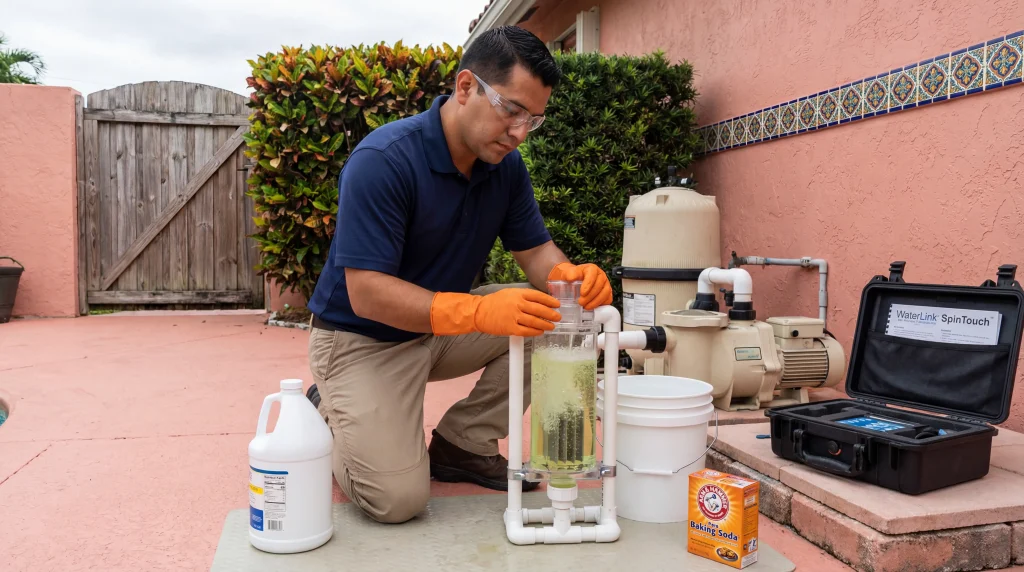
If your pool service maintains a saltwater pool, here’s the minimum they should be doing—and what you should ask about if they’re not.
Salt cell inspection every 6-8 weeks (more frequently than mainland recommendations due to tropical conditions). They should be physically removing and examining the cell, not just trusting indicator lights.
Salt level verification monthly using a quality test kit, not just reading the generator display.
CYA monitoring every 2-4 weeks to ensure stabilizer stays in the 70-80 ppm range that protects chlorine from UV degradation.
pH management with an understanding of the upward drift pattern. They should anticipate regular acid additions, not treat each pH reading as a new surprise.
Documentation of cell condition so you can track degradation over time and plan for replacement before complete failure.
Generator output adjustment based on conditions—increasing during periods of heavy use or high temperatures, decreasing during lower-demand periods. Running at maximum output constantly shortens cell life unnecessarily.
Warning Signs of Inadequate Service
How do you know if your current service provider actually understands saltwater systems? Watch for these indicators:
They treat it like a traditional chlorine pool. If the service protocol looks identical to what they’d do for a tablet-chlorinated pool, they’re probably not addressing saltwater-specific needs.
They don’t inspect the cell. If you’ve never seen them remove and examine the salt cell, they’re not doing it—and scale is building up unchecked.
They can’t explain the system. Ask them how the generator produces chlorine, what the salt level should be, or when the cell was last cleaned. If they don’t have clear answers, they don’t have the knowledge.
Problems keep recurring. Chronic algae issues, persistent pH problems, or premature cell failure often indicate service that’s reactive rather than preventive—treating symptoms without understanding causes.
They don’t test salt levels. If they’re relying entirely on the generator display, they’re missing accuracy verification that could catch problems early.
The Cost of Getting It Wrong
Premature cell failure is the most expensive consequence of inadequate saltwater pool maintenance. A cell that should last 5 years failing at 2-3 years costs you an extra $400-900 per replacement cycle. Over the life of your system, that’s thousands of dollars in avoidable expense.
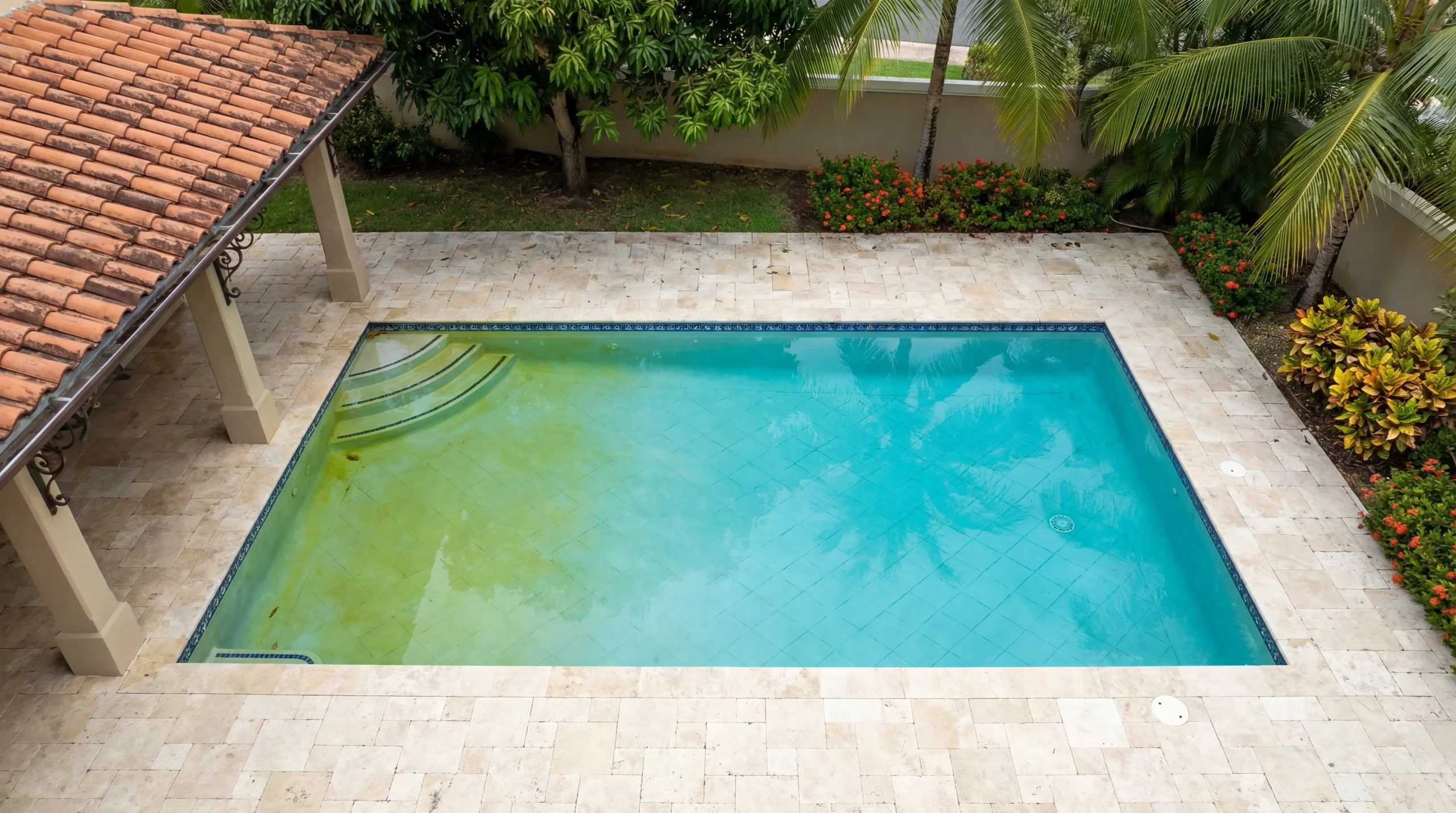
Beyond cell replacement, improper maintenance causes secondary problems: algae blooms from inadequate chlorine production, surface damage from unbalanced chemistry, corrosion from elevated salt levels, and the frustration of a pool that never quite works right despite having “automatic” chlorination.
The irony of saltwater pools is that they require more specialized knowledge than traditional pools, not less. The technology makes day-to-day operation easier, but it demands expertise your service provider may not have.
At Pristine Pools, we maintain saltwater pools throughout Palmas del Mar, Humacao, and Naguabo with protocols adapted for tropical conditions. Our weekly service includes salt-specific monitoring that protects your investment and keeps your system efficient.
Frequently Asked Questions
How often should a salt cell be cleaned in Puerto Rico?
In tropical conditions with year-round warm water, salt cells typically need inspection every 6-8 weeks and cleaning only when scale is actually present. Over-cleaning damages the protective coating on titanium plates—each acid wash removes a small amount. The goal is to clean when necessary, not on an arbitrary schedule. If your cell needs cleaning more frequently than every 2-3 months, there’s usually a water chemistry issue (high pH, high calcium) that needs correction.
Why does my saltwater pool’s pH keep rising?
This is normal behavior, not a malfunction. The electrolysis process that converts salt to chlorine naturally increases pH over time. Saltwater pools typically require more frequent acid additions than traditional chlorine pools. If your service provider seems surprised by rising pH every week, they may not understand how saltwater systems work. The solution isn’t finding what’s “wrong”—it’s accepting that regular pH management is part of proper saltwater pool care.
How long should a salt cell last in Puerto Rico?
Expect 3-5 years with proper maintenance in tropical conditions, compared to 5-7 years often cited for seasonal climates. Year-round operation in warm water accelerates wear. The most important factors in cell longevity are proper water chemistry (especially pH and calcium hardness), appropriate cleaning frequency, and correct system sizing. An undersized cell working at maximum output constantly will fail faster than a properly sized cell running at moderate output.
Do I still need to shock a saltwater pool?
Occasionally, yes. While your salt chlorine generator produces chlorine continuously, it has a maximum output rate. Situations that create sudden high chlorine demand—heavy bather loads, storms that introduce organics, or early-stage algae development—may exceed what your generator can produce. Supplemental shocking with liquid chlorine or cal-hypo can handle these spikes without stressing the cell. Most saltwater pools benefit from periodic shock treatment, especially after significant weather events or heavy pool use.
Can any pool service maintain a saltwater pool?
Technically, yes. Effectively? That depends on their knowledge. Many traditional pool services lack specific training on salt chlorine generators and apply the same protocols they use for tablet-chlorinated pools. Key indicators of saltwater competence: they physically inspect the cell regularly, they test salt levels independently of the generator display, they understand why pH rises consistently, and they can explain how the system works. If those basics are missing, the service may be inadequate.Share